
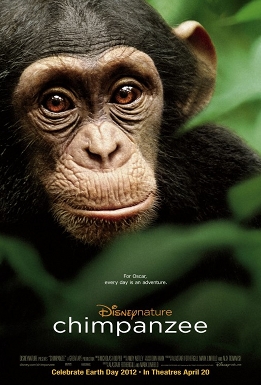
For all those expecting Disney's Chimpanzee to be a hardline nature
documentary, take special note of the name Disney. Though the film compiles some excellent footage of primates
in their natural habitat, it's all edited together in a format resembling,
well, a typical Disney film about family, heroes, and villains. Tim Allen, only making his trademark
ape grunt once, narrates the "story" of Oscar, a young chimpanzee, and his
tribe of companions living in the jungle while facing the
territorial threat of a rival group led by another chimp named "“ wait for it "“
Scar.
Watching
the film, one might get the idea that the actual threat of Scar is being
manufactured to add a narrative thrust to what is otherwise a series of
unrelated scenes about Oscar's gang scavenging for food and climbing
trees. That's probably the case,
but the children to whom the film is being marketed to probably won't know the
difference. For the most part,
it's just a lot of cute fluff interspersed with dramatic heft when Oscar's
mother vanishes after a particularly violent storm.
The film's most interesting
sequence, perhaps not coincidentally, is the one that children in the audience
will probably feel the most uncomfortable with. Though normally the chimpanzees are seen grabbing fruit from
fallen trees and collecting nuts, at one point they go on a calculated hunt for
the meat of monkeys. Most children
probably don't make a distinction between the different species of primates and
Allen's narration doesn't care to either, making the scene "“ which features the
particularly stellar intellectual talents of the animals in action "“ oddly
disquieting for a younger audience.
It's an isolated moment in a film that follows the line of your average
Disney narrative, though, even The Lion
King had a couple of disturbing moments. It's just that this time the animals are real.


